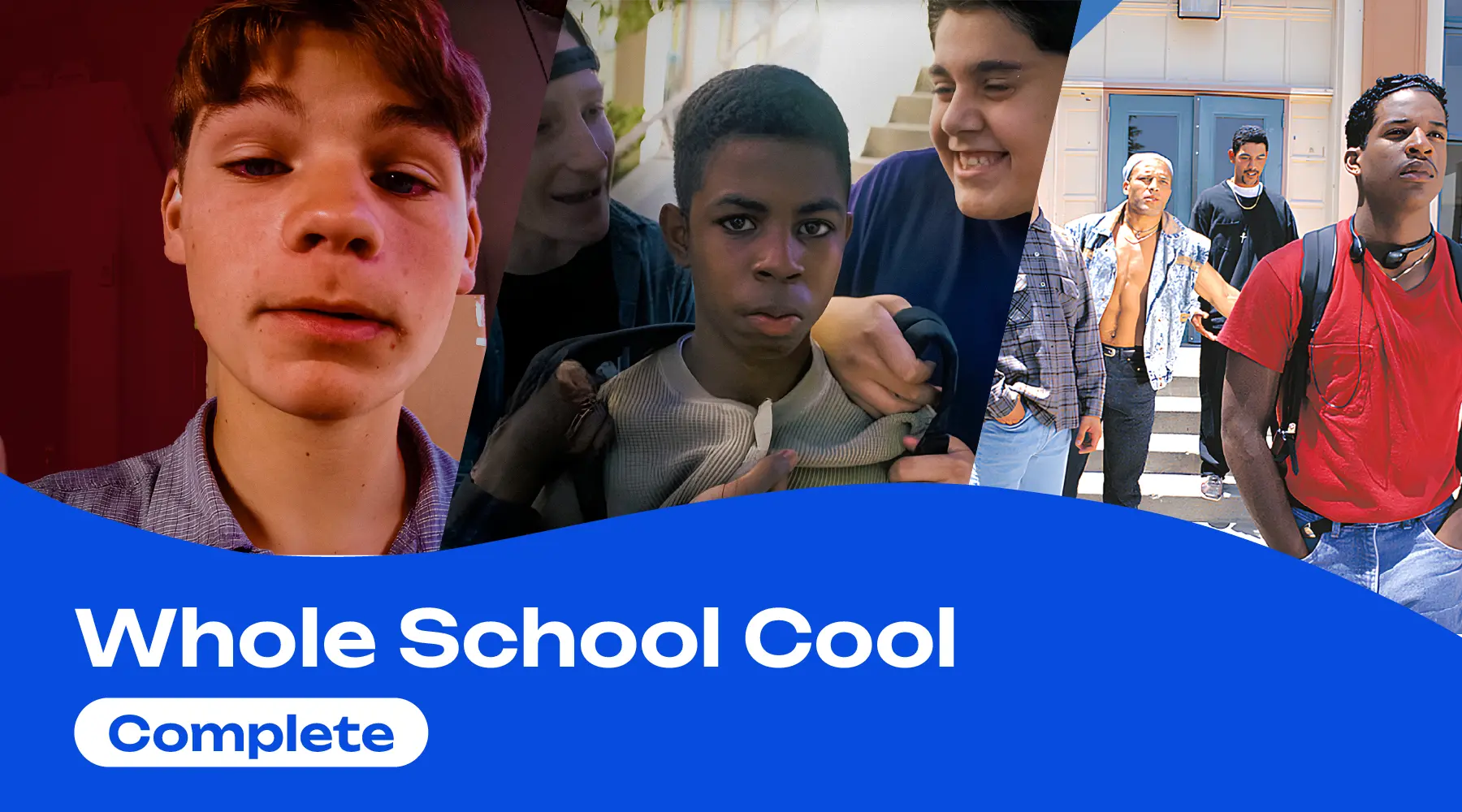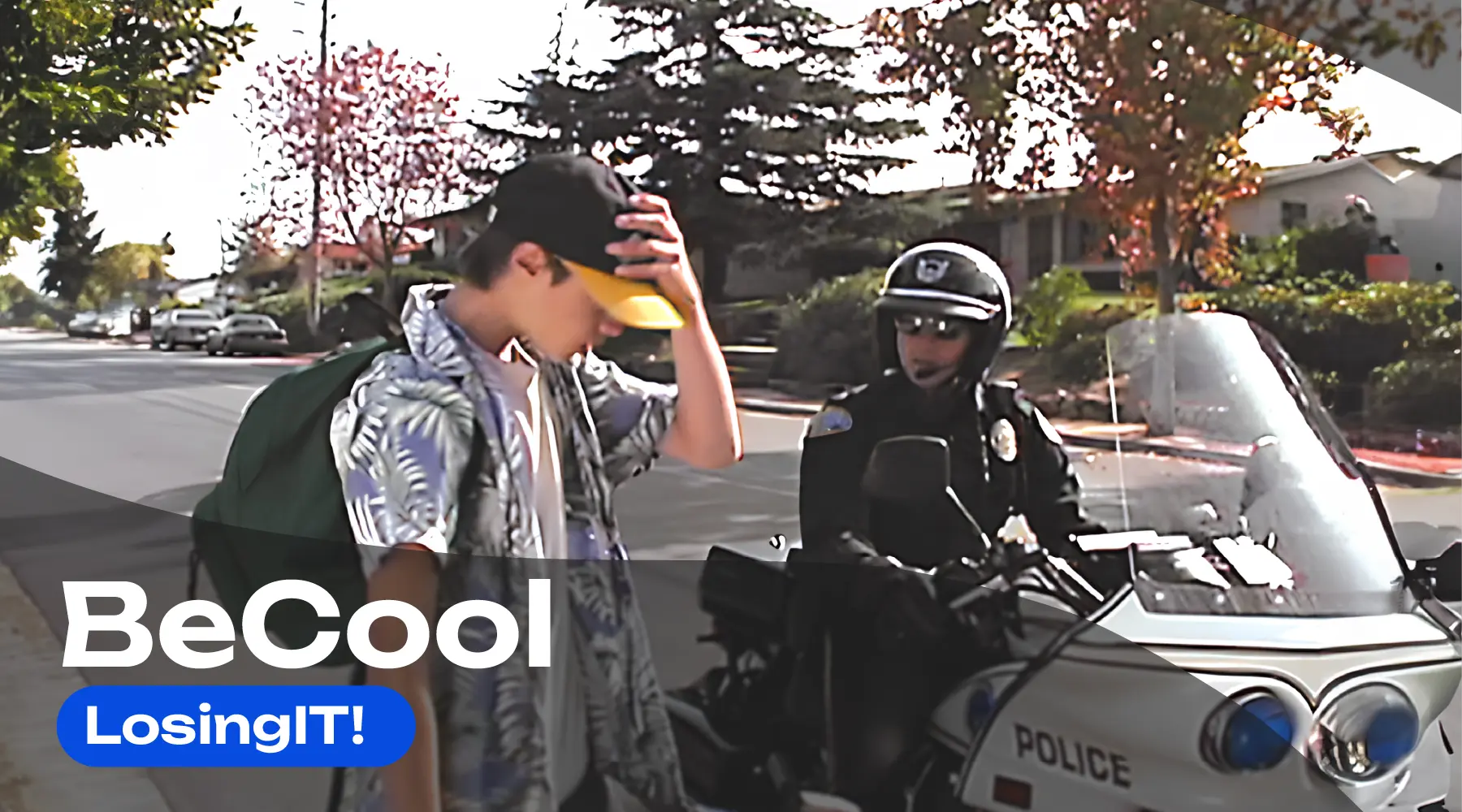
Teach your students how to avoid conflicts - and how to stay calm and in control when they happen.
Middle school can be tough for students, with conflicts and provocations often leading to overreactions and destructive behavior. As educators, we want to help our students learn to handle themselves before they can handle conflict.
The BeCool\u00ae: Losing It! program offers proven self-talk techniques to help students avoid common thinking mistakes and put problems in a realistic perspective.
It is a four-module program designed for middle school students that uses peer video modeling to bring each lesson to life. Students enter the heads of their on-screen peers and hear the internal dialogue that keeps them calm under pressure. The program teaches students how to use rational self-talk to prevent overreactions to conflict and provocations. It is based on cognitive-behavioral therapy and has been shown to be effective in reducing anger and aggressive behavior in middle school students.
BeCool: Losing It! is easy to implement and can be used in the classroom or in a counseling setting. Each module includes a comprehensive teacher\u2019s guide with exercises, discussion questions, and reproducible handouts. This program is available as a standalone license or as part of the Stanfield+ subscription (99/yr for your school\u2019s full digital library).
This curriculum is presented in a relaxed, child-friendly format that makes it accessible for even the youngest students.
One of the most challenging emotions that students may struggle with is anger. Not only is anger a difficult emotion to handle, but it can also lead to regrettable actions and consequences. That is where the BeCool: Losing It! program comes in\u2014it teaches students how to use self-talk techniques to avoid overreacting to conflict and provocation.
BeCool: Losing It! uses a video modeling format to demonstrate powerful self-talk strategies. Students will enter the heads of their video peers and learn how to cope with situations and people who threaten their cool on the most basic level.
The program also teaches students how to check out the facts before acting on assumptions. This is a crucial skill that helps to avoid misunderstandings and miscommunications.
By teaching students to look at reality from different angles, they can come to a more rational understanding of the situation. They will also learn to stop themselves from reacting impulsively and to use their self-control skills to build self-respect. This is the essence of \u201ccool\u201d\u2014being able to stay calm in the face of adversity.
Through failure, rejection, and attacks on their dignity, students will see how their peers use self-talk to stay calm and in control. The practical demonstrations in the videos make the program easy to follow, and the skills learned are more likely to be retained.
Module 1: Disrespect
In this module, students will learn how to imagine the consequences of their actions and use rational self-talk to manage their feelings and behavior when they feel disrespected.
The 29-minute instruction segment is accompanied by a helpful teacher\u2019s guide that includes exercises and discussion questions. By teaching students to understand the power of their own thoughts and reactions, we empower them to make better choices and avoid escalation.
Module 2: Disrespect 2
Module 2 builds on the first by teaching students how to gain control of negative self-talk that often occurs when they feel disrespected. In the 20-minute instruction segment, students learn the difference between self-talk that helps and self-talk that hurts.
They will practice identifying negative self-talk and replacing it with positive thoughts that help them stay calm and focused. Again, the teacher\u2019s guide offers suggestions for exercises and discussion topics to help reinforce the concepts.
Module 3: Failure/Frustration
Most students struggle with feelings of failure and frustration at some point in their academic journey. Module 3 helps them see how irrational self-talk leads to losing it, while BeCool techniques lead them to accept failure as a step toward achievement.
In just 20 minutes, your students will learn to identify unhelpful thoughts and replace them with more positive, realistic ones. They will leave the module feeling empowered to face challenges head-on.
Module 4: Rejection
Rejection is a tough pill to swallow for anyone, but especially for young students who may lack the emotional skills to cope. In this module, students learn how to put rejection into perspective using BeCool self-talk techniques.
They will practice calming themselves down and keeping situations under control when things don\u2019t go their way. At 22 minutes long, this module is a valuable addition to any classroom toolbox.
Students will feel empowered as they put these concepts into practice and start seeing positive results in their relationships.
Helping your students harness their inner cool is priceless. The BeCool: Losing It! program will give them the tools they need to regulate their emotions, solve conflicts, and build their confidence.
As an educator, you can help your students reach their full potential by giving them access to this valuable resource. The program includes four modules and four teacher\u2019s guides that can easily be integrated into your classroom lessons. This self-talk program teaches middle school students how to handle their emotions and put their problems into perspective.
Teachers who have used BeCool: Losing It! report that students begin catching their own thinking errors within just a few sessions\u2014pausing before reacting and choosing a measured response instead. That shift from impulsive behavior to reflective problem-solving has a ripple effect on classroom culture, reducing disruptions and building mutual respect among peers.
Give your students the gift of emotional self-regulation. Help them become the best version of themselves with BeCool: Losing It! This program is included in the Stanfield+ subscription (99/yr), which gives your school access to the complete Stanfield digital library.
The skills learned are designed to be lifelong assets, aiding students in feeling secure and connected throughout their educational journey and beyond.
| Part 1 — 1 activity | |
| 1 |
Spit Wads
In Video 1, Mike faces the random disrespect of two classmates who decide to use him for spit-wad target practice. After allowing his fantasies of ret...
|
| Part 2 — 1 activity | |
| 1 |
Jail Time
Video 2 depicts the extreme consequence of losing control. Josh and Ryan are pushed to their limits by two bullies. The video highlights how pessimist...
|
| Part 1 — 1 activity | |
| 1 |
Cheating
In Video 1, Charlie almost allows himself to be persuaded into helping some more popular peers cheat on their homework. His unrealistic belief in his...
|
| Part 2 — 1 activity | |
| 1 |
Drinking
In Video 2, after allowing her mind and her thoughts to be unnecessarily influenced by peer pressure, Morganne uses BeCool self-talk to neutralize her...
|
| Part 1 — 1 activity | |
| 1 |
Bad Day
In Video 1, Evan uses BeCool self-talk to cope with frustration. Instead of letting his anger and his thoughts get the best of him and losing it when...
|
| Part 2 — 1 activity | |
| 1 |
Pool Game
In Video 2, Evan overestimates his abilities as a pool player and sets himself up for failure when he challenges a player whose abilities are way over...
|
| Part 1 — 1 activity | |
| 1 |
Skateboard
In Video 1, he is rejected by peers he thought were his friends. He loses control when he allows irrational self-talk to support his knee-jerk violent...
|
| Part 2 — 1 activity | |
| 1 |
Best Friends
In the second video, Mindy Loses It! when she interprets rejection from a close friend as a sign that she is totally unlikeable. However, when she use...
|
BeCool LosingIT! is designed for students ages 10-14, including those with intellectual disabilities, autism spectrum disorder, learning disabilities, and emotional/behavioral needs. The content uses video modeling with real-life scenarios that work across ability levels.
The program includes 12 lessons with approximately 2 Hrs of video content. Each lesson includes streaming video content, a comprehensive digital teacher's guide with step-by-step instructions, printable student worksheets, discussion activities, and assessment tools. All materials are accessible from any browser.
Yes. BeCool LosingIT! is included in Stanfield+ ($999/year for the full 60+ program library). Both plans include a 30-day free trial with no credit card required.
BeCool LosingIT! aligns to CASEL Social-Emotional Learning standards, ASCA Mindsets & Behaviors, and IEP Goal Domains. Standards alignment documentation is available for every lesson to support compliance and IEP planning.
Yes. All Stanfield programs stream from any browser — smartboards, projectors, Chromebooks, tablets, or any internet-connected device. The entire library is also closed-captioned for accessibility.
BeCool LosingIT! uses Stanfield's signature video modeling approach — students watch real scenarios where characters demonstrate both ineffective and effective responses to conflict. This "see it, then do it" method helps students internalize appropriate responses before they face real situations.