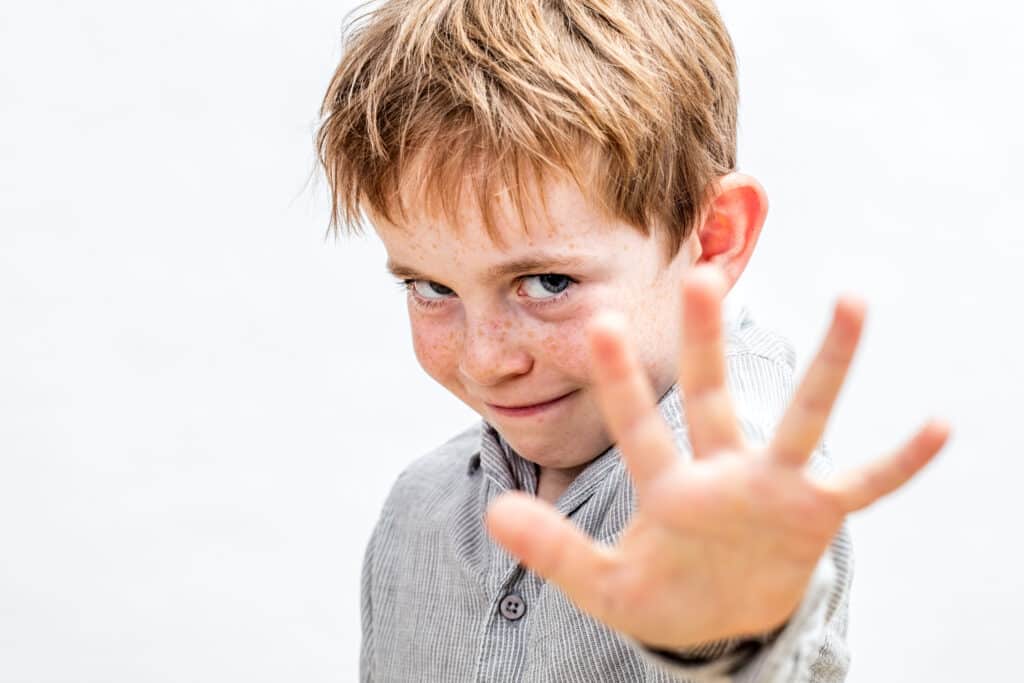
Social boundaries—the invisible lines that define acceptable interpersonal interactions—form the foundation of safe, respectful relationships in every context students will encounter. These boundaries protect personal identity and autonomy while creating the framework for comfortable, appropriate social engagement.
For educators working with diverse learners, teaching boundary concepts requires intentional, creative strategies that accommodate varied cognitive abilities and learning styles. According to the CDC's guidance on relationship safety, early boundary education significantly reduces risks of bullying, inappropriate contact, and social isolation—particularly critical for students with developmental disabilities who face heightened vulnerability.
This comprehensive guide explores evidence-based, engaging methods to help your students understand, communicate, and maintain healthy boundaries across all social settings.
Understanding Social Boundaries: Physical and Emotional Dimensions
Social boundaries encompass both tangible and abstract limits individuals establish to protect their wellbeing and autonomy. Research from the CASEL framework identifies boundary awareness as a core social-emotional competency, intersecting with self-awareness, self-management, and relationship skills.
Types of Social Boundaries
- Physical Boundaries: Personal space preferences, touch comfort levels, and bodily autonomy. For example, a student may welcome high-fives from friends but feel uncomfortable with unsolicited hugs from acquaintances.
- Emotional Boundaries: Limits on sharing personal information, emotional energy expenditure, and taking responsibility for others' feelings. This includes knowing when to offer support versus when to protect one's own emotional capacity.
- Digital Boundaries: Appropriate online behavior, privacy settings, and communication etiquette—increasingly critical as students navigate social media and digital learning platforms.
- Time Boundaries: Respecting others' schedules, understanding appropriate contact times, and recognizing when someone needs space or is unavailable.
Why Boundary Education Matters in Special Education
Teaching boundaries becomes particularly vital for students with developmental disabilities, who may struggle with abstract social concepts, nonverbal communication interpretation, or impulse control. Clear boundary instruction provides:
- Enhanced Safety Awareness: Students learn to identify uncomfortable situations and inappropriate requests, reducing vulnerability to exploitation or abuse.
- Improved Social Integration: Understanding cultural and contextual boundary norms facilitates peer acceptance and relationship building.
- Conflict Prevention: Clear expectations minimize misunderstandings that escalate into behavioral incidents or social rejection.
- Self-Advocacy Skills: Boundary knowledge empowers students to communicate needs assertively—a critical component of self-determination and independence.
- Preparation for Adult Relationships: Foundational boundary concepts transfer to workplace interactions, romantic relationships, and community participation.
10 Evidence-Based Strategies for Teaching Social Boundaries
The following approaches combine special education best practices with current research on social-emotional learning, offering differentiated pathways for boundary comprehension.
1. Establish a Collaborative Boundaries Charter
Rather than imposing rules top-down, co-create classroom boundary expectations with student input. This participatory approach increases buy-in and helps students internalize concepts through active construction.
Implementation steps:
- Begin with a class brainstorm: "What makes you feel safe and respected in our classroom?"
- Categorize responses into physical space, communication, emotions, and belongings
- Translate student language into clear, observable behaviors
- Display the charter prominently with visual supports (symbols, photos, or illustrations)
- Reference the charter when addressing boundary questions: "Let's check our charter—what did we agree about..."
2. Implement Social Stories and Visual Supports
Social stories, developed by Carol Gray and widely validated for autism education, break complex social situations into concrete, sequential narratives. According to research published in Exceptional Children (2023), visual supports combined with explicit instruction improve boundary recognition by 52% compared to verbal instruction alone.
Effective social story elements:
- First-person perspective: "When someone stands very close to me, I might feel uncomfortable"
- Descriptive sentences explaining the situation and context
- Perspective sentences showing others' viewpoints: "My friend might not realize they're too close"
- Directive sentences suggesting appropriate responses: "I can say, 'Please give me some space'"
- Affirmative statements reinforcing positive outcomes: "When I tell people my needs, they can respect my boundaries"
3. Practice Through Structured Role-Play
Role-playing transforms abstract concepts into embodied experiences, allowing students to rehearse boundary-setting in low-stakes scenarios. The National Institute of Mental Health identifies behavioral rehearsal as a key component of social skills interventions.
Role-play framework:
- Scenario introduction: Present a specific situation (e.g., "A classmate wants to borrow your phone")
- Model demonstration: Teacher demonstrates both boundary-respecting and boundary-violating responses
- Guided practice: Student pairs practice with teacher coaching and feedback
- Perspective rotation: Students switch roles to experience both boundary-setter and recipient viewpoints
- Debrief discussion: "How did it feel to say no? What was challenging? What worked well?"
For students who struggle with live role-play, use video modeling—pre-recorded scenarios students can watch, pause, and discuss before attempting themselves.
4. Cultivate Empathy Through Perspective-Taking Activities
Empathy serves as the emotional foundation for respecting others' boundaries. Research from the Yale Center for Emotional Intelligence demonstrates that explicit empathy instruction correlates with reduced boundary violations and increased prosocial behavior.
Students who can identify and understand others' emotions are 73% more likely to respect personal boundaries without reminders.
Perspective-taking strategies:
- Emotion charades: Students act out feelings while others identify the emotion and discuss what might cause it
- Literature analysis: After reading stories, discuss how characters felt when boundaries were honored or violated
- Reflection journals: "Write about a time someone respected your boundaries. How did it make you feel?"
- Video analysis: Watch age-appropriate clips showing boundary interactions, freezing to discuss characters' emotions and body language
- Partner interviews: Students interview peers about their boundary preferences, then share what they learned with the class
5. Teach the Circles Concept for Relationship Categories
The Circles curriculum, developed by James Stanfield Company, provides a visual framework for understanding appropriate behaviors across different relationship types. This evidence-based approach has been successfully implemented in special education programs since the 1980s, with updated research validating its effectiveness for students with intellectual disabilities, autism, and emotional-behavioral disorders.
The Circles Complete program offers comprehensive resources including:
- Color-coded relationship circles (purple for strangers, red for acquaintances, yellow for friends, green for family, etc.)
- Age-appropriate video modules demonstrating boundary concepts
- Hands-on activities and visual supports
- Differentiated lessons for varying cognitive levels
- Family engagement materials for consistency across settings
Practical Circles application:
- Students create personal Circles posters, placing real people (or generic roles) in appropriate circles
- Discuss how behaviors change across circles: hugging green circle family members versus waving to purple circle strangers
- Practice categorizing scenarios: "Your teacher asks you to move seats—which circle is your teacher in? What's an appropriate response?"
- Role-play boundary violations and corrections specific to each circle
6. Facilitate Collaborative Problem-Solving for Boundary Conflicts
When boundary misunderstandings occur, transform them into learning opportunities through structured problem-solving. This approach aligns with restorative practices in classroom management, emphasizing repair and learning over punishment.
Conflict resolution protocol:
- Identify the boundary issue: "What boundary was crossed?" (Use neutral, specific language)
- Explore perspectives: "How did each person feel? What did each person need?"
- Brainstorm solutions: "What are three ways we could handle this differently next time?"
- Evaluate options: "Which solution respects everyone's boundaries and follows our classroom charter?"
- Create an action plan: "What specific steps will you take? How will we know it's working?"
- Follow-up: Schedule a check-in to assess whether the solution was effective
7. Build Emotional Literacy for Boundary Communication
Students cannot articulate boundary violations if they lack vocabulary for their internal experiences. Explicit emotion education, a component of emotional regulation instruction, provides the language foundation for boundary enforcement.
Emotional literacy activities:
- Feelings charts: Create personalized emotion wheels showing physical sensations, intensity levels, and associated needs
- Body mapping: Students draw outlines of their bodies and color-code where they feel different emotions (anxiety in chest, anger in head, etc.)
- Emotion thermometers: Visual scales showing progression from "comfortable" through "uncomfortable" to "violated"—students practice identifying their current level
- Daily check-ins: Consistent routines for naming emotions build fluency and normalize emotional expression
- Sentence stems: Provide templates like "I feel _____ when _____ because I need _____"
8. Empower Students to Use "No" Assertively
Many students—particularly those socialized to be compliant or people-pleasers—struggle with boundary assertion. Explicit instruction in saying "no" respectfully but firmly builds self-advocacy critical for safety and autonomy.
Assertiveness training components:
- Tone practice: Record students saying "no" in different tones (passive, aggressive, assertive), then analyze which communicates boundaries effectively
- Body language instruction: Teach the components of assertive nonverbal communication (eye contact, upright posture, calm facial expression, appropriate volume)
- Graduated exposure: Start with low-stakes "no" practice (declining offered candy) before advancing to challenging scenarios (resisting peer pressure)
- Alternative phrases: Some students feel more comfortable with indirect refusals: "I'd rather not," "That doesn't work for me," "I'm not comfortable with that"
- Repeated practice: Assertiveness requires rehearsal to override default compliance patterns
Teaching the power of "no" isn't about encouraging defiance—it's about ensuring students can protect their wellbeing when adults aren't present to intervene.
9. Gamify Boundary Concepts for Engagement
Game-based learning increases motivation and retention while making abstract concepts concrete. Research in Educational Psychology Review (2024) found gamification improved social skills learning outcomes by 44% compared to traditional instruction.
Effective boundary games and activities:
- Boundary Bingo: Create cards with scenarios ("Someone stands too close," "A friend borrows without asking"). When situations arise in stories or discussions, students mark their cards and discuss appropriate responses
- Personal Space Bubble Exercise: Students hold hula hoops or extend arms to visualize personal space, then practice navigating crowded areas while respecting others' bubbles
- Red Light/Green Light Boundaries: Modify the classic game—"green light" means approach is welcome, "yellow" means proceed cautiously, "red" means stop and give space
- Boundary Scenario Cards: Teams draw cards with situations, categorize the boundary type, identify the violation, and propose appropriate responses—earn points for complete, respectful answers
- Digital Boundary Simulations: Age-appropriate apps or online scenarios where students make boundary-related choices and see consequences
10. Partner With Families for Consistency Across Settings
Boundary learning requires reinforcement beyond school hours. Family collaboration ensures students encounter consistent expectations and receive supported practice in diverse contexts.
Family engagement strategies:
- Parent education workshops: Offer evening sessions explaining boundary concepts and teaching strategies families can use at home
- Take-home materials: Provide simplified versions of classroom activities families can complete together
- Communication notebooks: Daily or weekly journals traveling between home and school, documenting boundary challenges and successes
- Video demonstrations: Record short clips of effective boundary-setting strategies families can reference
- Scenario coaching: Equip families with scripts for real-world situations: grocery stores, family gatherings, neighborhood play
- Regular check-ins: Schedule brief conferences to align on specific boundary goals and troubleshoot challenges
Consider recommending the Stanfield Plus — Parent or Stanfield Pro — Parent subscriptions, which provide families with age-appropriate lessons, activities, and videos supporting boundary education at home—creating seamless continuity between school and family learning.
Implementing Boundary Education: Practical Considerations
Differentiation for Diverse Learners
Not all students will access boundary concepts through identical methods. Effective instruction requires multiple entry points:
- Visual learners: Emphasize diagrams, color-coding, social stories with illustrations, video modeling
- Kinesthetic learners: Prioritize role-play, movement games, physical boundary markers (tape lines, hula hoops)
- Auditory learners: Use verbal explanations, audio social stories, discussion-based processing
- Students with limited verbal ability: Provide communication boards with boundary-related vocabulary, teach gestures or signs for "stop" and "space please"
- Students with cognitive disabilities: Simplify to essential concepts, increase repetition, use concrete examples from students' daily routines
- Twice-exceptional learners: Provide cognitively complex content while accommodating social-emotional development gaps
Integrating Boundaries Across the Curriculum
Rather than treating boundary education as isolated lessons, weave concepts throughout your instructional day:
- Literature: Analyze characters' boundary decisions in read-alouds and independent reading
- Social studies: Explore cultural variations in personal space, privacy norms, and relationship expectations
- Health education: Connect boundary concepts to body autonomy, consent, and abuse prevention
- Life skills: Apply boundaries to workplace interactions, customer service scenarios, roommate situations
- Technology: Discuss digital boundaries, privacy settings, appropriate online communication
This integration helps students recognize boundaries as universal principles rather than arbitrary school rules, facilitating generalization to non-school contexts.
Addressing Boundary Violations Constructively
When students cross boundaries—inevitable during the learning process—respond with teaching rather than punishment:
- Immediate, calm intervention: Stop the behavior neutrally: "Pause—let's check boundaries"
- Identify the specific boundary: "You entered Jordan's personal space without permission"
- Label the impact: "Notice Jordan stepped back and crossed their arms—that body language shows discomfort"
- Prompt correct response: "What can you do right now to respect Jordan's boundary?"
- Acknowledge attempts: "I saw you back up and ask permission—that's respecting boundaries"
- Plan for next time: "Tomorrow, before you approach someone's desk, what will you do first?"
Measuring Progress in Boundary Understanding
Assessment helps you determine whether instruction is effective and identify students needing additional support. Consider these evaluation methods:
Formative Assessment Strategies
- Scenario response: Present hypothetical situations and ask students to identify boundary violations and appropriate responses
- Role-play observation: Use checklists documenting specific skills (uses appropriate tone, maintains respectful distance, accepts "no" gracefully)
- Self-assessment: Students rate their own boundary-setting confidence using visual scales
- Peer feedback: Structured protocols where students offer each other specific observations about boundary-respecting behaviors
- Video review: Record role-plays, then students analyze their own performance against rubric criteria
Summative Assessment Options
- Boundary portfolios: Collections of student work (written reflections, diagrams, scenario responses) demonstrating growth over time
- Practical demonstrations: Students navigate scripted scenarios with unfamiliar adults, applying learned skills in novel contexts
- Pre/post surveys: Compare boundary knowledge and confidence levels from the beginning to end of instruction
- Behavioral data: Track frequency of boundary-related incidents, peer conflicts, and appropriate boundary-setting instances
For comprehensive social-emotional assessment guidance, explore Beyond Exit Slips: 17 Creative Ways to Check for Understanding, which includes strategies adaptable to boundary education.
Common Challenges and Solutions
Challenge: Students with Autism Struggle with Abstract Boundary Concepts
Solution: Make boundaries maximally concrete. Use physical markers (floor tape, desk spacers), consistent visual cues (personal space bubbles), and rule-based frameworks. The Circles approach works particularly well because it provides clear categories with explicit rules for each level. Consider implementing the Circles curriculum specifically designed for students who benefit from concrete, systematic instruction.
Challenge: Cultural Background Creates Conflicting Boundary Expectations
Solution: Acknowledge that boundary norms vary across cultures. Discuss how "home rules" might differ from "school rules," helping students develop code-switching skills. Invite family input about culturally-specific practices, then problem-solve together: "In our culture, refusing food is disrespectful. At school, you have the right to decline foods. How can we honor both values?"
Challenge: Students Lack Impulse Control to Honor Boundaries Despite Understanding
Solution: Separate knowledge from execution. Provide environmental supports reducing impulse demand: visual cues, physical distance, adult proximity, pre-correction before challenging situations. Teach and practice self-regulation strategies students can use when they notice impulses arising. Consider whether medication or occupational therapy evaluation might address underlying executive function challenges.
Challenge: Students Use Boundary-Setting as Manipulation or Social Control
Solution: Teach the difference between authentic boundaries (protecting genuine needs) and manipulative boundaries (controlling others or avoiding responsibilities). Provide scripts distinguishing: "I need space because I'm overwhelmed" (authentic) versus "I won't talk to you unless you do what I want" (manipulation). Address underlying needs the manipulative behavior attempts to meet.
Technology Tools Supporting Boundary Education
Digital resources can enhance boundary instruction, particularly for students who engage readily with technology:
- Social Skills Apps: Programs like Social Express or Conversation Builder provide interactive scenarios with immediate feedback
- Video Modeling Libraries: Platforms like Model Me Kids offer diverse boundary-related video demonstrations
- Visual Schedule Apps: Programs helping students anticipate and prepare for social situations requiring boundary awareness
- AI-Enhanced Learning: Consider exploring AI Teaching Tools that can generate personalized social scenarios, adapt difficulty levels based on student response, and provide individualized feedback—learn more about responsible AI use in classrooms
Extending Boundary Education Beyond Elementary Skills
As students mature, boundary instruction must evolve to address developmentally-appropriate challenges:
Middle School Boundary Topics
- Peer pressure and assertive refusal in social groups
- Digital boundaries: appropriate texting, social media privacy, sharing photos
- Romantic relationship boundaries and consent fundamentals
- Navigating boundary conflicts without adult mediation
- Self-advocacy in educational settings (requesting accommodations, addressing conflicts with teachers)
Explore 15 Engaging SEL Lessons for Middle School That Actually Work for age-appropriate activities addressing these emerging challenges.
High School and Transition-Age Boundary Topics
- Workplace boundaries: professional relationships, harassment recognition and reporting, appropriate supervisor interactions
- Independent living boundaries: roommate agreements, landlord relationships, service provider interactions
- Healthcare self-advocacy: communicating with doctors, understanding medical privacy rights
- Financial boundaries: recognizing scams, managing pressure from family or friends requesting money
- Intimate relationships: comprehensive consent, healthy relationship patterns, recognizing abuse warning signs
The Transitions Complete curriculum addresses these advanced boundary concepts within comprehensive independent living instruction—critical for students preparing for post-secondary transitions. Learn more about supporting this developmental stage in How to Make the College Transition as Seamless as Possible.
Building a School-Wide Boundary Culture
Individual classroom instruction becomes more powerful when embedded in consistent school-wide expectations:
- Staff training: Ensure all adults model boundary-respecting language and behaviors
- Common vocabulary: Adopt shared terms (Circles language, specific consent phrases) used across classrooms
- Universal visual supports: Display Circles posters, personal space reminders, and communication tools throughout the building
- Consistent consequences: Align disciplinary responses to boundary violations across teachers and settings
- Positive recognition systems: School-wide acknowledgment when students demonstrate strong boundary awareness
- Administrator support: Leadership championing boundary education in assemblies, newsletters, and professional development
For district-level implementation, explore District / Enterprise licensing options providing comprehensive curricula and training across your system.
Frequently Asked Questions
What age should I start teaching social boundaries to students with disabilities?
Boundary education should begin as early as preschool with developmentally-appropriate concepts. Young children can learn basic body autonomy ("your body belongs to you"), consent for touch ("ask before hugging"), and simple personal space awareness. The complexity and depth of instruction evolves across developmental stages, but foundational concepts establish early safety awareness and respect for self and others.
How do I teach boundaries without making students afraid of normal social interactions?
Frame boundaries as tools that make relationships better, not barriers preventing connection. Emphasize that boundaries create safety allowing deeper trust and friendship. Use positive examples of boundary-respecting relationships alongside violation scenarios. Celebrate when students successfully navigate boundary situations, highlighting the positive feelings resulting from mutual respect. Avoid fear-based messaging; instead, build competence and confidence in students' ability to manage social situations effectively.
What if a student's family doesn't reinforce boundary concepts at home?
While home-school consistency is ideal, school-based instruction alone still provides value. Explicitly teach students that different settings have different rules—just as we use "indoor voices" inside versus outdoor volumes during recess. Some students successfully compartmentalize school boundary expectations even when home practices differ. Focus on what you can control: providing clear, consistent instruction and safe practice opportunities in your classroom. Document your efforts and any concerns about student safety, following appropriate reporting protocols if family practices raise child welfare questions.
How do I handle situations where enforcing boundaries conflicts with relationship-building?
Boundaries and connection aren't mutually exclusive—research consistently shows that clear boundaries actually strengthen relationships by creating predictability and trust. When a student protests, "But I thought we were friends!" after you enforce a boundary, use it as a teaching moment: "Good friends respect each other's boundaries. I care about you and I need [specific boundary]. Both things are true." Model that you can be warm, caring, and supportive while maintaining professional boundaries—this demonstrates the exact skill you're teaching students to apply in their peer relationships.
What resources exist for teaching boundaries related to sexuality and romantic relationships?
Age-appropriate comprehensive sexuality education should be part of transition planning for adolescents with disabilities. The Circles curriculum includes developmentally-appropriate content addressing intimacy, consent, private versus public behaviors, and healthy relationships. Additionally, organizations like SIECUS (Sexuality Information and Education Council of the United States) provide evidence-based resources designed for diverse learners. Consult your district policies, collaborate with families on consent for sensitive topics, and ensure instruction is inclusive of diverse sexual orientations and gender identities while emphasizing universal principles of respect, consent, and safety.
Creating Lasting Impact Through Consistent Boundary Education
Teaching social boundaries represents one of the most important investments you can make in students' long-term wellbeing, safety, and relationship success. While the instruction requires patience, creativity, and consistent reinforcement, the outcomes—students who can advocate for themselves, respect others, navigate social complexity, and maintain their safety—justify the effort many times over.
Remember that boundary learning is developmental and ongoing. Students will make mistakes, require repeated instruction, and need support generalizing skills across contexts. Approach this teaching with the same grace you'd want others to extend to you as you navigate your own boundary challenges.
By implementing these evidence-based strategies—from structured curricula like Circles Complete to creative games, collaborative problem-solving, and family partnerships—you equip students


