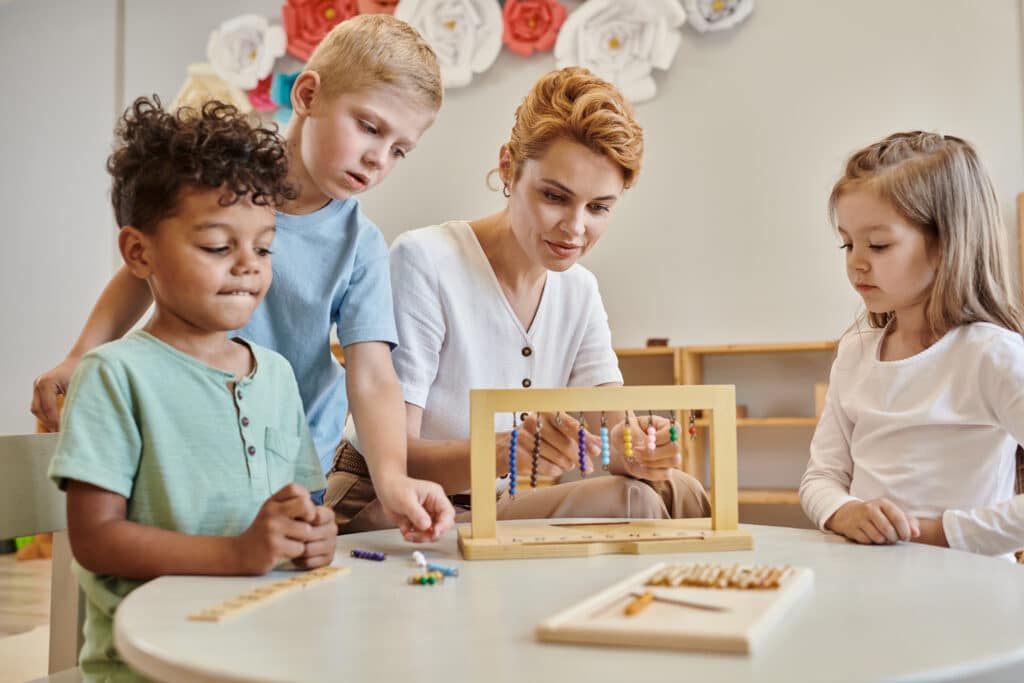
In today's educational landscape—dominated by standardized testing, rigid pacing guides, and screen-based instruction—the transformative power of play often gets pushed aside. Yet a growing body of research confirms what early childhood experts and neuroscientists have long known: play isn't a break from learning. It's one of the most effective pathways to it.
Play-based learning represents a fundamental shift in how we approach education, particularly for young learners and students with diverse needs. This methodology recognizes that children don't simply absorb information passively—they construct deep understanding through active exploration, social interaction, creative experimentation, and the kind of joyful engagement that builds lifelong learners.
Whether you're an educator looking to revitalize your classroom, a parent seeking to support your child's development, or an administrator evaluating instructional approaches, understanding how to harness the science-backed power of play can unlock remarkable growth across cognitive, social, and emotional domains.
What is Play-Based Learning?
Play-based learning is an intentional, research-grounded educational approach that uses guided, purposeful play activities to develop academic concepts and social-emotional competencies. Unlike unstructured free play or recess, this methodology involves careful planning and skillful facilitation by educators who create rich learning environments and scaffold children's exploration without controlling it.
This approach draws from established educational philosophies including developmentally appropriate practice, Reggio Emilia, and Montessori frameworks, where child-led discovery is central. According to the Centers for Disease Control and Prevention, play-based learning helps children develop the cognitive flexibility, executive function skills, and emotional regulation necessary for both academic success and lifelong well-being.
The distinction between play-based learning and simple playtime lies in intentionality and purpose. Educators using this approach:
- Design learning environments with specific developmental and academic goals in mind
- Observe children's play closely to identify teachable moments and emerging interests
- Ask open-ended questions that deepen exploration without directing outcomes
- Introduce materials, challenges, and provocations that extend thinking
- Document learning processes to make children's intellectual growth visible to families and stakeholders
- Connect play experiences explicitly to curriculum standards and learning objectives
Countries implementing play-based curricula at scale provide compelling evidence of effectiveness. Finland's education system, consistently ranked among the world's best, incorporates play-based learning throughout early education and into elementary grades. Finnish children don't begin formal academics until age seven, yet they consistently outperform international peers on academic assessments while reporting higher satisfaction and lower stress. A 2023 comparative study found that Finnish students showed stronger intrinsic motivation and deeper conceptual understanding than peers in test-focused systems—advantages that compound over time.
Play is the work of childhood, and in the classroom, it becomes the foundation for every skill that matters.
The Research-Backed Benefits of Play-Based Learning
Contemporary research across developmental psychology, neuroscience, and education confirms that play-based learning delivers measurable benefits across multiple developmental domains. The evidence is both extensive and compelling:
Cognitive Development and Executive Function
Play-based activities strengthen critical thinking, problem-solving, and executive function skills—the mental processes that enable planning, focus, memory, and flexible thinking. When children engage in complex play scenarios—building elaborate block structures, negotiating roles in dramatic play, or solving multi-step puzzles—they exercise the same cognitive muscles needed for advanced academic tasks.
A 2023 meta-analysis from the American Psychological Association reviewing 47 studies found that children who engaged in regular structured play showed enhanced cognitive flexibility, improved working memory, and stronger ability to shift between tasks. These executive function skills predict academic achievement, career success, and health outcomes more reliably than IQ alone.
Play-based learning particularly supports:
- Working memory development through multi-step pretend play sequences requiring children to hold and manipulate information
- Inhibitory control as children follow game rules, take turns, and regulate impulses during cooperative activities
- Cognitive flexibility when adapting play scenarios to new situations, integrating peers' ideas, or solving unexpected problems
- Planning and organization skills during complex building projects, dramatic play scenarios, and collaborative challenges
- Metacognition as children reflect on their strategies, evaluate effectiveness, and adjust approaches
Social-Emotional Learning and Self-Regulation
Play provides a natural, low-stakes laboratory for developing social-emotional competencies that form the foundation of healthy development. Through cooperative play, children learn to recognize and name emotions, navigate conflicts constructively, practice perspective-taking and empathy, and regulate their own responses—skills essential for school success and lifelong relationships.
Research from the Collaborative for Academic, Social, and Emotional Learning (CASEL) demonstrates that play-based SEL instruction produces more authentic, transferable skill development than didactic worksheet approaches. When children practice emotional regulation during real play conflicts rather than hypothetical scenarios on paper, the learning transfers more effectively to everyday situations.
Benefits include:
- Enhanced emotional literacy through role-playing diverse scenarios and discussing characters' feelings
- Improved conflict resolution skills developed authentically during cooperative play disagreements
- Stronger self-regulation from managing impulses during games, waiting for turns, and adapting to changing circumstances
- Greater empathy and perspective-taking cultivated by inhabiting others' viewpoints in pretend play
- Relationship-building skills including cooperation, negotiation, compromise, and collaborative problem-solving
Language and Literacy Development
Play-rich environments immerse children in meaningful language experiences that accelerate vocabulary acquisition, narrative skills, and literacy development. During dramatic play, children use sophisticated vocabulary in context, practice storytelling and sequencing, experiment with written language through sign-making and list-writing, and engage in authentic communication with genuine purposes.
A 2024 study in Early Childhood Research Quarterly found that children in play-based literacy programs showed stronger phonological awareness, vocabulary depth, comprehension skills, and writing motivation than peers receiving traditional phonics-only instruction. The difference was particularly pronounced for children from lower-income backgrounds and English learners, suggesting play-based approaches help close opportunity gaps.
Play supports language development by:
- Providing authentic contexts for using new vocabulary meaningfully
- Encouraging extended discourse and complex sentence structures during pretend scenarios
- Integrating reading and writing into play purposes (menus, signs, letters, lists)
- Supporting oral language development through peer conversation and negotiation
- Making language learning joyful rather than anxiety-producing
Physical Development and Motor Skills
Active play supports both gross and fine motor development essential for academic tasks and overall health. When children manipulate small objects, use tools during art projects, navigate obstacle courses, or engage in active outdoor play, they build the motor control, body awareness, and physical confidence necessary for writing, self-care, and participation in physical activities.
The American Academy of Pediatrics emphasizes that physical play also supports brain development, reduces stress hormones, improves attention regulation, and contributes to healthy sleep patterns—all critical for learning readiness and mental health.
School Readiness and Academic Achievement
Contrary to persistent concerns that play-based approaches sacrifice academic preparation, research consistently shows they enhance it. Multiple longitudinal studies tracking children through elementary school found that those who attended play-based kindergartens showed stronger academic motivation, better peer relationships, superior problem-solving skills, and equivalent or higher academic performance compared to peers from direct-instruction programs—with advantages becoming more pronounced over time.
Play-based learning builds academic readiness by:
- Developing mathematical thinking through sorting, patterning, measuring, counting, and comparing during authentic play contexts
- Supporting early literacy through storytelling, environmental print exploration, writing for real purposes, and book-sharing
- Fostering scientific inquiry through hands-on experimentation, observation, prediction, and hypothesis-testing
- Building the sustained attention, frustration tolerance, and learning stamina needed for formal instruction
- Creating intrinsic motivation and positive associations with learning rather than compliance or anxiety
The goal isn't to make play more like work—it's to make learning more like play.
Implementing Play-Based Learning in Your Classroom
Transforming your classroom into an effective play-based learning environment requires intentional planning, thoughtful facilitation, and patience as you develop new skills. Here's how to make it happen:
1. Design Your Physical Environment Strategically
Your classroom layout should invite exploration, support autonomy, and accommodate various types of play. Create distinct, well-organized learning centers that encourage different developmental experiences:
- Construction area: Blocks, loose parts, planks, and building materials for spatial reasoning, engineering, and collaborative problem-solving
- Dramatic play zone: Rotating themed props, costumes, and authentic materials (menus, maps, receipts) for social-emotional learning and literacy
- Art studio: Open-ended materials for creative expression, fine motor development, and visual-spatial thinking
- Science/discovery center: Natural materials, magnifying tools, collections, and investigation equipment for inquiry-based learning
- Literacy corner: Diverse books, comfortable seating, writing materials, and storytelling props for language development
- Math/manipulatives area: Pattern blocks, counting materials, measurement tools, and games for mathematical thinking
- Sensory table: Rotating materials (sand, water, rice, natural items) for tactile exploration and self-regulation
Ensure your space includes both active and quiet zones, allowing children to self-regulate energy levels. Consider natural lighting, plants, calming colors, and spaces for small-group collaboration as well as individual focus. The environment itself becomes a "third teacher" that guides learning and communicates what's valued.
2. Stock Open-Ended Materials That Inspire Creativity
The most powerful play materials have no predetermined outcome or single "correct" use. Instead of plastic toys with limited functions, prioritize versatile, open-ended materials that children can use in countless imaginative ways:
- Natural and loose parts: Wood pieces, shells, stones, pinecones, fabric scraps, buttons, corks
- Construction materials: Unit blocks, hollow blocks, cardboard boxes, planks, connecting materials
- Art and creation supplies: Clay, paint, collage materials, natural items, recyclables, quality drawing tools
- Authentic tools and props: Real items scaled appropriately (measuring cups, tools, kitchen items, office supplies)
- Flexible dramatic play materials: Generic props that support multiple scenarios rather than single-purpose toys
Open-ended materials promote problem-solving, creativity, and divergent thinking because there's no single "right" way to use them. A cardboard box might become a rocket ship, a house, a car, a puppet theater, or a treasure chest—each transformation representing sophisticated cognitive work, planning, and imagination.
3. Facilitate Rather Than Direct
Your role shifts from instructor to facilitator, guide, and co-learner. Instead of leading or controlling play, you create conditions for rich play experiences and support children's self-directed exploration. This nuanced role means:
- Observing carefully to understand children's interests, thinking processes, and developmental needs
- Asking open-ended questions that extend thinking: "What might happen if...?" "How could we...?" "Why do you think...?"
- Introducing provocations—new materials, questions, or challenges that deepen exploration without dictating outcomes
- Documenting learning through photos, videos, transcribed conversations, and work samples
- Stepping back strategically to let children struggle productively with challenges, make mistakes, and develop solutions
- Knowing when to intervene to support safety, inclusion, or skill-building, and when to trust the process
4. Develop Extended Project-Based Play Experiences
Long-term projects allow deep investigation of topics that genuinely capture students' interest and curiosity. Following project-based learning principles, you might spend weeks exploring a theme through multiple play modalities, documentation, research, and representation.
Extended projects honor children's capacity for sustained engagement while building the deep knowledge and vocabulary that characterize expertise in any domain.
5. Incorporate Dramatic Play and Role-Taking
Pretend play offers unparalleled opportunities for social-emotional learning, language development, and perspective-taking. Encourage elaborate dramatic play by:
- Rotating themed dramatic play areas based on genuine student interests and curriculum connections (restaurant, veterinary clinic, space station, grocery store, post office)
- Providing authentic props and literacy-rich materials relevant to each theme (actual menus, prescription pads, maps, catalogs)
- Modeling complex play scenarios and rich vocabulary without taking over or directing the narrative
- Supporting children in negotiating roles, resolving play conflicts, and including peers who want to join
- Connecting dramatic play to real experiences through field trips, guest speakers, or video explorations
Through sustained role-play, children practice friendship skills, experiment with sophisticated language structures, develop theory of mind—the ability to understand others' mental states—and explore social rules and relationships safely.
6. Protect Substantial Blocks of Uninterrupted Play Time
Meaningful play requires time—perhaps the scarcest resource in contemporary classrooms. Research consistently shows children need at least 45-60 minutes of uninterrupted play to develop complex scenarios, encounter and solve problems, and engage in the deep learning that characterizes high-quality play. Shorter periods often result in superficial engagement before cleanup begins, frustrating children and limiting cognitive benefits.
Consider restructuring your daily schedule to include:
- Extended morning play/exploration time (60-90 minutes minimum for preschool and kindergarten)
- Generous outdoor active play periods that support physical development and stress reduction
- Afternoon choice time or project work allowing for sustained focus
- Flexibility to extend particularly rich play experiences across multiple days or weeks
- Protection of play time from interruptions like assemblies, announcements, or transitions
Advocating for adequate play time may require educating administrators and families about why this time represents rigorous learning, not wasted minutes. Documentation helps make this case persuasively.
7. Join Children's Play as a Genuine Participant
Strategically participating in children's play—not to direct it, but to enrich and extend it—deepens learning while building relationships. Your involvement might include:
- Taking an authentic role in dramatic play and genuinely following children's lead in the narrative
- Wondering aloud about possibilities to spark new thinking: "I wonder what would happen if we tried..."
- Introducing sophisticated vocabulary naturally within play contexts
- Modeling collaboration, negotiation, and problem-solving strategies without being didactic
- Asking genuine questions about children's thinking and plans
- Knowing when to exit gracefully, leaving children to continue independently
8. Create Zones for Different Play Types and Energy Levels
Effective play-based classrooms accommodate diverse play preferences, learning styles, and temperaments. Designate areas for:
- Active, louder play: Construction, large movement, dramatic play, and collaborative activities
- Quiet, focused play: Puzzles, detailed art, reading, writing, and individual exploration
- Social, collaborative play: Games, cooperative building, group dramatic scenarios, and partner activities
- Solitary, reflective play: Individual art projects, journaling, solo investigation, and quiet observation
This variety honors different temperaments and energy levels while teaching children to self-regulate by choosing appropriate activities for their current state. Some children need active play to focus later; others need quiet starts to their day. Providing options supports all learners.
9. Document and Make Learning Visible
Systematic documentation serves multiple critical purposes: it helps you assess learning rigorously, shows families and administrators the educational value of play, helps children reflect on and extend their own thinking, and provides authentic assessment data. Consider these documentation approaches:
- Photographs and videos capturing significant play moments, problem-solving processes, and collaborative work
- Transcribed conversations recording children's explanations, theories, and collaborative discussions
- Documentation panels displaying the progression of projects with images, quotes, and educator analysis
- Learning stories that narrate significant moments and connect them to developmental domains and standards
- Children's own documentation through drawings, dictation, photos they take, and written reflections
- Portfolio collections showing development over time across multiple domains
Quality documentation transforms invisible learning into concrete evidence of skill development, helping skeptical stakeholders understand that play is the curriculum, not a break from it.
10. Integrate Technology Thoughtfully and Selectively
While play-based learning emphasizes hands-on, sensory-rich experiences, technology can enhance—not replace—these experiences when used intentionally. Consider:
- Using tablets for children to photograph and reflect on their work
- Incorporating coding toys and robotics that require hands-on problem-solving
- Viewing videos that extend play themes (how bridges are built, how veterinarians work)
- Using AI tools responsibly to generate play scenarios, project ideas, or documentation support for educators
- Creating digital books or videos where children narrate their learning
Technology should support, not dominate, and should always serve play and inquiry rather than replacing physical, social engagement.
Play-Based Learning for Diverse Learners
Play-based approaches particularly benefit students with disabilities, neurodivergent learners, English learners, and those from diverse cultural and economic backgrounds. Here's why—and how to maximize inclusion:
Supporting Students with Disabilities and Neurodivergent Learners
Play provides a naturally differentiated context where students engage with the same materials at their own developmental level, making play inherently more inclusive than worksheet-based instruction. For students with developmental disabilities, autism, ADHD, or other learning differences, play offers authentic opportunities to practice social boundaries, communication skills, and self-regulation in contexts that feel motivating rather than clinical.
Consider these inclusive practices:
- Provide sensory-friendly materials and quiet spaces for students who experience sensory sensitivities or need calming environments
- Use visual supports and structured play schemas (visual schedules, role cards, play scripts) to support students who benefit from predictability
- Incorporate assistive technology and adaptive materials that enable full participation regardless of physical or cognitive differences
- Embed therapeutic goals within play activities for students receiving speech, occupational, or physical therapy services
- Teach play skills explicitly when needed, recognizing that some students benefit from direct instruction in play strategies before engaging independently
- Create flexible participation options allowing parallel play, observation, or modified roles for students who need scaffolding
For students with ADHD who struggle with focus, play-based learning's active, hands-on nature often increases engagement dramatically compared to seated work. The novelty, choice, and movement inherent in play naturally support attention regulation.
Honoring Cultural and Linguistic Diversity
Play transcends language barriers, making it particularly valuable for English learners and multilingual students. Children can participate meaningfully and build social connections before developing English proficiency, naturally acquiring language through interaction with peers in contexts where communication has genuine purpose.
Support cultural and linguistic diversity by:
- Incorporating culturally relevant materials, images, and props that reflect students' backgrounds and experiences
- Honoring diverse play traditions and inviting families to share games, songs, and activities from their cultures
- Providing materials labeled in multiple languages
- Encouraging use of home languages during play, recognizing that bilingualism is an asset
- Featuring diverse books, dolls, and materials that affirm all identities
- Learning key phrases in students' home languages to support participation and relationship-building
This approach affirms children's identities while expanding everyone's cultural understanding and creating truly inclusive learning communities.
Addressing Economic Diversity Through Play
High-quality play-based learning doesn't require expensive purchased materials. Natural items, recycled materials, and open-ended loose parts often inspire more creative, sustained play than costly toys. This means play-based classrooms can be accessible regardless of budget while providing rich learning experiences that help close opportunity gaps.
Addressing Common Concerns About Play-Based Learning
Despite robust evidence supporting play-based approaches, educators and families sometimes worry about academic preparedness, particularly given testing pressures. Here's how to address these legitimate concerns with current research:
Concern: "Children won't learn academic content through play."
Reality: Extensive research consistently demonstrates that play-based learning supports academic achievement equal to or exceeding direct instruction—with significant additional benefits. A comprehensive 2023 review of 68 studies published in Pediatrics found that play-based approaches produce comparable or superior academic outcomes while also building social-emotional skills, intrinsic motivation, creativity, and mental health that didactic instruction neglects.
Math concepts emerge naturally when children measure ingredients during cooking play, create symmetrical patterns with blocks, divide materials fairly, or collect data about classroom interests. Literacy develops through authentic sign-making, storytelling, book exploration, and writing embedded in play purposes. Science inquiry happens through hands-on experimentation, observation, and documentation. The difference is that children construct deep understanding through application rather than memorizing decontextualized facts.
Concern: "Play-based learning doesn't prepare students for standardized testing."
Reality: The executive function skills, persistence, problem-solving abilities, and conceptual understanding developed through play actually enhance test performance more than test prep does. Students who can regulate attention, think flexibly about problems, persevere through challenges, and apply concepts to new situations perform better on assessments than those who've simply memorized isolated skills.
Additionally, the intrinsic motivation and positive associations with learning fostered through play-based approaches create students who remain engaged with school rather than burning out from pressure. A 2024 longitudinal study found that students from play-based kindergartens showed stronger academic performance and higher test scores in third and fourth grade compared to peers from academic-focused programs—suggesting the benefits compound over time rather than creating deficits.
Concern: "Play-based learning is only appropriate for early childhood."
Reality: While most commonly implemented in preschool and kindergarten, play-based principles benefit learners of all ages. Middle and high school students engage in sophisticated play through simulations, design challenges, dramatic performances, strategic games, hands-on labs, and collaborative projects. The Stanfield Pro curriculum demonstrates how play-based approaches effectively teach complex life skills, social concepts, and academic content to older students with diverse learning needs.
The key is matching play complexity and autonomy to developmental level. Adolescents need opportunities for creative problem-solving, collaborative challenges, and hands-on application just as much as young children—they simply engage with more sophisticated content and abstract concepts through these playful modalities.
Concern: "I don't have time for play with all the curriculum I'm required to cover."
Reality: Play-based learning doesn't add to your curriculum—it becomes the vehicle for delivering it more effectively. Rather than teaching reading, math, science, and social studies separately through worksheets and lectures, integrated play experiences address multiple standards simultaneously while building the engagement and deep understanding that make learning stick.
A single extended block play session might address geometry standards, measurement, planning and design, collaborative problem-solving, oral language development, and scientific inquiry—accomplishing in one meaningful experience what might otherwise require separate, disconnected lessons. Teachers implementing play-based approaches often find they cover more content, not less, because children are deeply engaged and learning transfers across contexts.
Building Family and Administrator Support
Successfully implementing play-based learning requires buy-in from families and administrators who may have been educated through traditional methods and hold different mental models about what "real learning" looks like. Here's how to build understanding and support:
Educating and Partnering with Families
- Share current research on play-based learning outcomes during back-to-school events, newsletters, and conferences—use accessible summaries from reputable sources
- Create compelling documentation displays that show the rigorous learning embedded in play, with photos annotated to highlight visible thinking and standards addressed
- Invite families to participate in classroom play sessions so they can witness firsthand how play drives learning
- Send home regular "Play Is Learning" updates connecting specific play activities to academic standards and developmental milestones
- Host family play workshops demonstrating how to support learning through play at home, sharing specific activities and interaction strategies
- Create video documentation showing children's sophisticated thinking, problem-solving, and collaboration during play
- Honor families' concerns respectfully while providing evidence that play-based approaches prepare children exceptionally well for academic success
Demonstrating Value to Administrators and Colleagues
Help administrators and skeptical colleagues understand play-based learning through
Get a free Circles sample lesson
Download a complete lesson from our Circles social-boundaries curriculum — free PDF, no strings. We'll email you the link.


